

What is a False Start? Understanding Those Early Bedtime Wakings
There’s nothing quite as frustrating as finally getting your baby to sleep at bedtime, taking a deep breath, and thinking, “Okay… we made it.”
And then, 45 minutes later… they’re awake. If this happens regularly, you may be dealing with a false start.
A false start can have parents analyzing every step to try and figure out what went wrong. Was bedtime too early? Too late? Did the nap throw everything off? Are they hungry? Overtired? Undertired? And my favorite, are they teething?
The answer isn’t always obvious — but a false start is usually a clue that something about your child’s sleep needs, schedule, or bedtime routine may need a little adjusting. Let’s talk about what a false start actually is, why it happens, and what you can do about it.
What is a False Start?
A false start is when your baby or toddler falls asleep at bedtime and then wakes again soon afterward — usually within about 30–60 minutes, generally after one sleep cycle. They may wake crying, fussing, calling for you, or simply seem ready to start their evening all over again. The frustrating part? You may have felt like bedtime went perfectly.
Your child fell asleep quickly. They seemed tired. You thought you were officially off duty for the night… only to find yourself back in their room doing it all over again. A false start is essentially an interruption shortly after bedtime, before your child has settled into a longer stretch of nighttime sleep.
Is It Really a False Start?
Before changing your child’s entire schedule, it’s important to make sure you’re actually dealing with a false start. A wake-up shortly after bedtime can have several different causes.
Bedtime resistance happens when your child has trouble settling down in the first place. They may cry, play, stand up, or repeatedly need your help before falling asleep.
A false start is different because your child actually falls asleep and then wakes up again shortly afterward. And a typical night waking generally happens later in the night, rather than just 30–60 minutes after bedtime.
A night terror happens in the first half of the night, but is categorized by screaming, kicking or thrashing. The child is often hard to console and it’s most common after age 3, so this is not something babies would be experiencing.
Knowing what you’re actually seeing is important because the solution depends on the reason behind the waking.
Why Do They Happen?
This is where things get a little tricky. There isn’t one universal reason for a false start. In my experience, I want to look at the whole picture before assuming your child simply needs an earlier or later bedtime.
Two of the biggest possibilities are overtiredness and undertiredness.
1. Your Child May Be Overtired
This is one of the first things I look at when a child is experiencing frequent false starts.
When your child has been awake longer than their body can comfortably handle, they can become overtired. This triggers their system to release cortisol (the opposite of the sleepy hormone melatonin). So instead of making sleep easier, that extra stretch of awake time can actually make it harder for them to stay asleep.
You may see a child who seems exhausted at bedtime, falls asleep quickly, and then wakes 30–45 minutes later. This is one reason I don’t recommend assuming that a later bedtime will automatically lead to a later or better night. Sometimes the opposite is true. An earlier bedtime can be exactly what your child needs.
2. Your Child May Not Be Tired Enough
On the other hand, a false start can also happen when your child simply hasn’t built up enough sleep pressure by bedtime. Maybe they took a long afternoon nap or the second nap ended later than usual. Or their final wake window isn’t quite long enough for their age and individual sleep needs.
In this situation, your child may fall asleep because they’re comfortable and their bedtime routine is familiar — but they aren’t quite ready for a long stretch of nighttime sleep. So, they treat bedtime like a nap, waking up after that first sleep cycle and suddenly seem awake and ready to go.
This is why I don’t recommend automatically moving bedtime earlier every time you see a false start. The right answer depends on what your child’s entire day looked like.
What Else Can Contribute?
Sleep isn’t just about the clock. Your child’s sleep environment, bedtime routine, and how they fall asleep can all play a role.
Sleep Environment:
A room that is too bright, too warm, too cold, or otherwise distracting can make it harder for your child to stay asleep.
For babies and toddlers, I generally recommend making the room very dark, like a cave for both naps and nighttime sleep. When you’re in your child’s room at naptime or bedtime, let your eyes adjust. If you can’t see your hand in front of your face then it’s dark enough. If your child wakes during a lighter stage of sleep and there is any light in the room, it’s very stimulating which can make it much harder for them to settle back down.
Bedtime Routine:
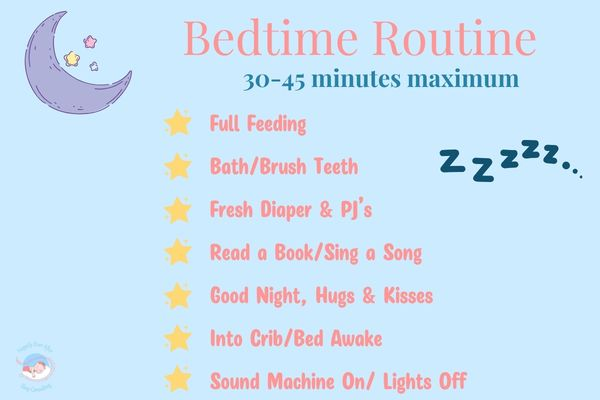
A 30 minute consistent and predictable bedtime routine helps your child understand that sleep is coming. It tells the brain and body we’re transitioning out of day and into night with sleep to follow. See the example below.
It doesn’t need to be complicated. When the same things happen in the same general order each night, your child’s brain begins to recognize those cues as part of the transition from daytime to nighttime.
How Your Child Falls Asleep:
This is a BIG one. If your child is rocked, fed, bounced, or held to sleep, this is called a sleep prop association. When they partially wake between sleep cycles, they look for that same assistance to get back to sleep.
And this can absolutely contribute to a false start. For example, if your baby falls asleep while being rocked to sleep in your arms, but wakes up 45 minutes later in the crib, they cry out because they need your help falling back to sleep.
This doesn’t mean you have to stop comforting your child. It means you want to help them develop the ability to fall asleep in the same environment but without putting them completely to sleep.

How Can You Fix a False Start?
The good news is that a false start is often something we can improve once we figure out what’s driving it.
Here are a few places to start:
1. Look at the Entire Day
Don’t look at bedtime in isolation. Look at their overall daytime sleep and awake windows. Awake windows are the amount of time awake between sleep periods. Ensure the last awake window from last nap to bedtime is appropriate for their age and number of naps.
Sometimes the answer becomes much clearer when you look at the entire 24-hour picture. If you struggle finding the right awake window or schedule for your little one, you can download my free awake window guide here.
2. Consider Adjusting Bedtime
If your child appears overtired, try moving bedtime 15–30 minutes earlier for several nights and see whether the false starts improve.
If your child seems undertired, you may need to adjust the timing in the opposite direction. This is more likely the case for an older baby, typically 6 months and up.
This is why I don’t believe in one-size-fits-all sleep schedules. Your child’s sleep needs can change depending on age, temperament, nap patterns, and what is happening developmentally.
3. Give Your Child the Opportunity to Fall Asleep Independently
If your goal is for your child to sleep more independently, bedtime is the most important time to practice that skill. Move the feeding earlier in the routine rather than making that the final step before sleep. Make sure they’re laid down fully awake.
Offer them comfort as needed to calm them, but don’t put them to sleep. This is key to helping them connect those sleep cycles and sleep through the night.
4. Keep Your Response Boring
If your goal is for your child to sleep more independently, bedtime is the most important time to practice that skill. Move the feeding earlier in the routine rather than making that the final step before sleep. Make sure they’re laid down fully awake.
Offer them comfort as needed to calm them, but don’t put them to sleep. This is key to helping them connect those sleep cycles and sleep through the night.

Remember: A False Start Is a Clue, Not a Failure
If your baby is waking 30–60 minutes after bedtime, don’t panic.
Your child’s sleep is giving you a little clue that something may need to be adjusted — whether that’s their daytime sleep, awake windows, bedtime, sleep environment, and the way they’re falling asleep.
And sometimes the fix is surprisingly small.
If you’re dealing with frequent false starts and can’t figure out what is causing them, it can be so frustrating. But this is why you need to look at your child’s sleep as a whole.
You don’t have to keep guessing your way through bedtime. If you’d like personalized help figuring out what’s happening with your child’s sleep, I’d love to help. Book a free call with me today.